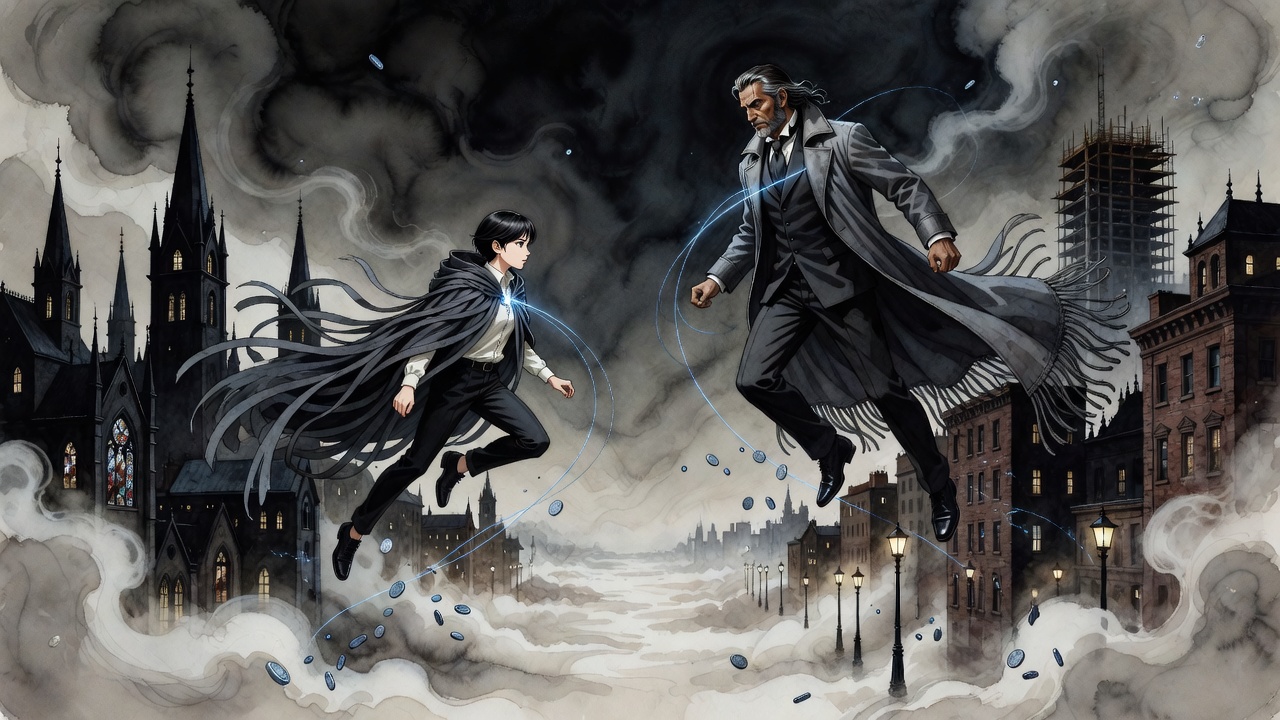
Brandon Sanderson · The Mistborn Saga · 2006 – 2022
The Mistborn Saga, walked
Seven novels, one secret novella and two eras three hundred years apart, summarized in detail and walked in about 259 painted frames.
This is an unofficial reader’s companion to Brandon Sanderson’s Mistborn saga: the seven novels of its first two eras and the novella Secret History, published between 2006 and 2022. Every book is summarized in detail, part by part, and walked in painted frames, about 259 of them, in an ink-and-wash of ash and mist. A world page lays out Scadrial, its metals and its gods, and an adaptations page follows the films, games and audio dramas, made and unmade.
It spoils everything. This page is the whole saga at a glance: nine frames, a cast and a reading order. The book pages hold nothing back, twists and deaths included.
Nobody has filmed Mistborn yet. Apple, which took the screen rights to Sanderson’s Cosmere in January 2026, is developing a first film from The Final Empire; Sanderson is writing it himself, finished a first draft in July 2026 and is now revising it. The long road there is on the adaptations page.
Two eras, one world
Mistborn began, Sanderson says on his own site, with two ideas. One was a heist story about a crew of gentlemen thieves, each with a distinctive magic power. The other was a question: “What if the Dark Lord won?” The heist turned out to be the backdrop. The question became the first trilogy, and its answer became everything after.
The world is Scadrial, and its magic runs on metal. Allomancers swallow flakes of metal and burn them for powers: steel to push on nearby metal, iron to pull on it, pewter for strength, tin for the senses, brass and zinc to soothe or inflame other people’s emotions. Most can burn only one metal; a Mistborn can burn them all. Feruchemists store their own strength, weight or memory in metal they wear and draw it back later. Hemalurgy, the ugliest of the three, steals powers by driving a metal spike through one person and into another. The world page has the whole table.
The saga comes in two eras about three hundred years apart. Era One (2006–08) is epic fantasy under a red sun, in an empire where ash falls by day, mist rises every night and a god-emperor has ruled for a thousand years. Era Two (2011–22), the four Wax and Wayne books, is a detective western in a world remade: blue sky, railways and electric light at first, skyscrapers and airships by the end. By the late 2000s Sanderson was planning a trilogy of trilogies, the second set in a modern city and the third in science fiction; The Alloy of Law began as a stop-gap, set between the two, and grew into a four-book series of its own, which he has suggested readers think of as series one-and-a-half. What drew him, he told a Worldcon audience in 2025, was a series where “the foundations of religion and government are laid in an epic fantasy” and the story then jumps forward to see what that world has become.
That is what this walk follows: the crimes, gods and crew of the first trilogy turning into the history, religion and even the calendar of the second. Era Two’s months are named for Kelsier’s crew, its capital for a dead emperor, and one of its churches worships a thief.
Era One: the Final Empire
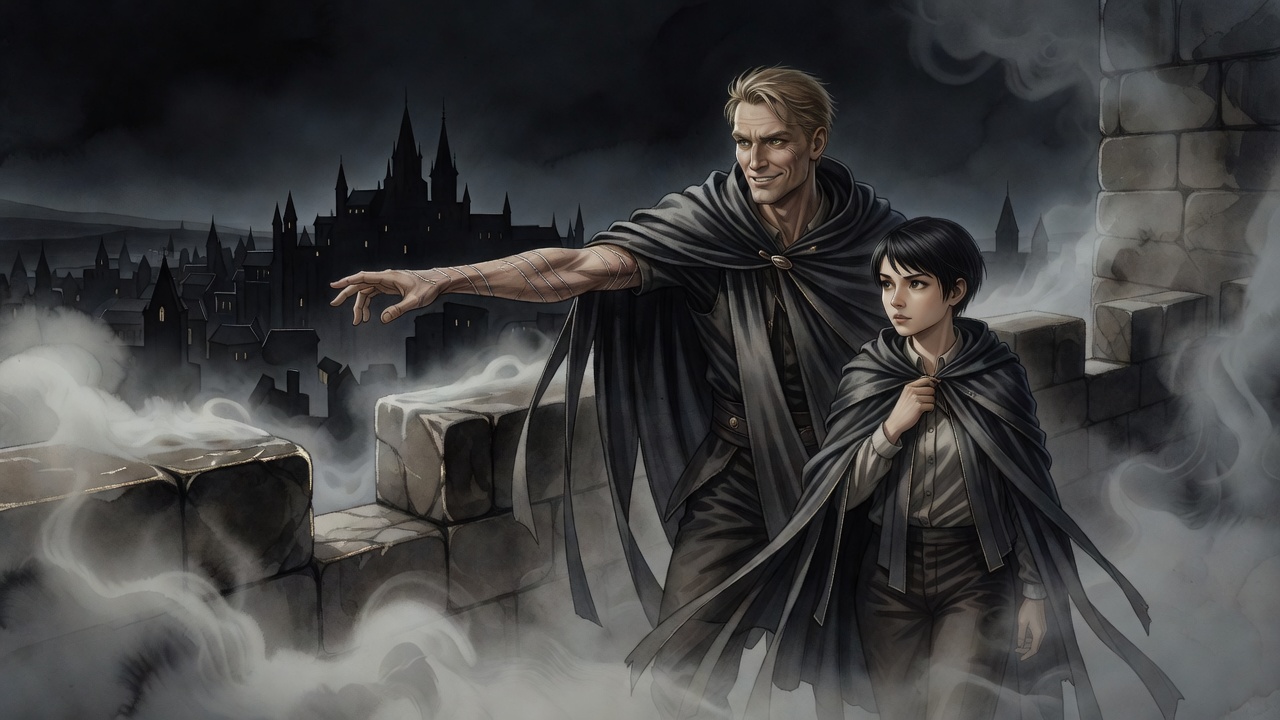
I · The Final Empire (2006). “Ash fell from the sky.” For a thousand years the Lord Ruler has ruled the Final Empire as god and emperor, his nobles keeping the skaa as something close to slaves and his Steel Ministry, with its Inquisitors, watching everyone. Kelsier, a half-skaa Mistborn who survived the atium mines of Hathsin, gathers a crew of thieves in Luthadel for an impossible job: overthrow the empire and steal the Lord Ruler’s hoard of atium. He recruits Vin, a sixteen-year-old street thief who does not know she is Mistborn, teaches her Allomancy in the night mists and sends her to the nobility’s balls as Valette Renoux, where she meets Elend Venture, the bookish heir of the greatest house. The heist becomes a revolution. Kelsier lets the Lord Ruler kill him in front of a crowd, so that the skaa will rise for a martyr, and Vin learns the god-emperor’s secret and kills him with a plain wooden spear. Elend ends the book as king of a city nobody knows how to run.
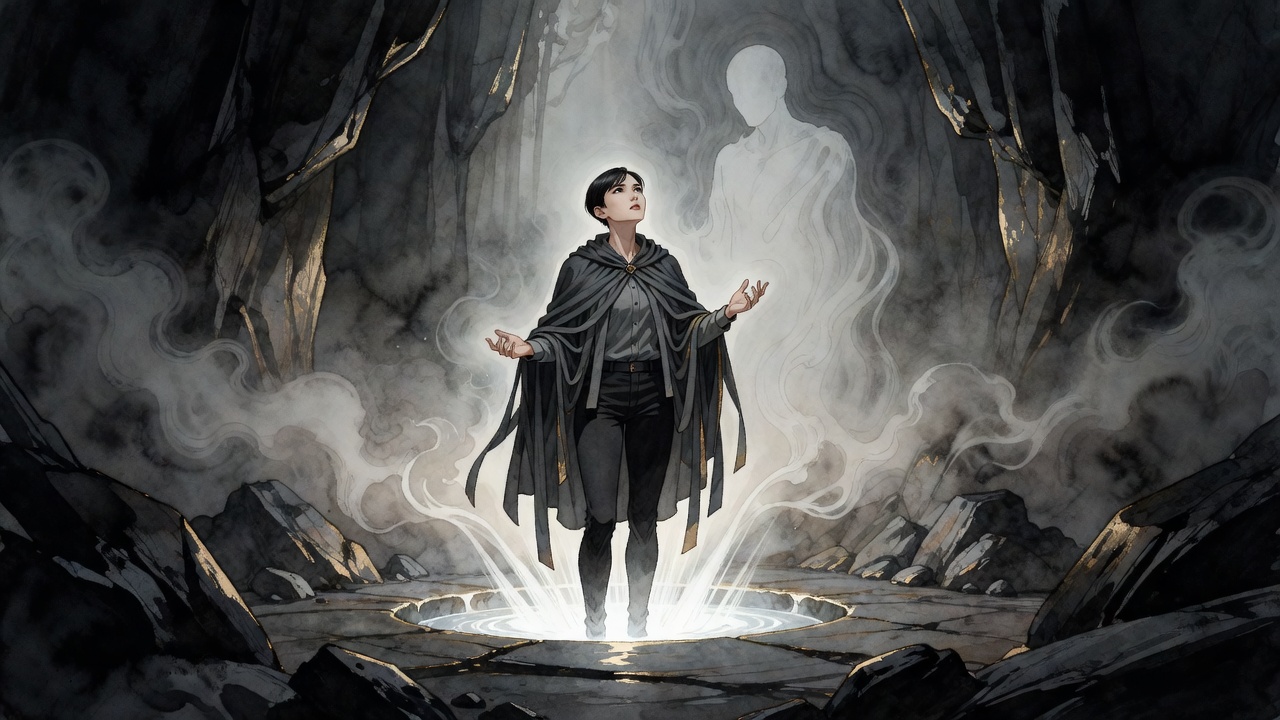
II · The Well of Ascension (2007). The book about what comes after the heroes win. A year later three armies besiege Luthadel: Elend’s father, Straff Venture; Ashweather Cett; and twenty thousand koloss under Jastes Lekal, once Elend’s friend. Elend governs through the Assembly he created, and it votes him out; a Terris Keeper, Tindwyl, puts him in a white uniform and teaches him to be a king anyway. Vin hunts a kandra impostor inside the palace, spars in the mists with Zane, Elend’s Mistborn half-brother, who hears a voice in his head, and is stalked by a spirit made of mist. Sazed, travelling, finds the mists killing people by day and a steel plate left by the Terrisman who first named the Hero of Ages. Vin kills Zane and marries Elend; the koloss break into the city and kill Clubs, Dockson and Tindwyl before she takes the creatures for her own. Then she finds the Well of Ascension under the palace and takes its power, and gives it up, sure that is right. Something that was imprisoned there goes free.
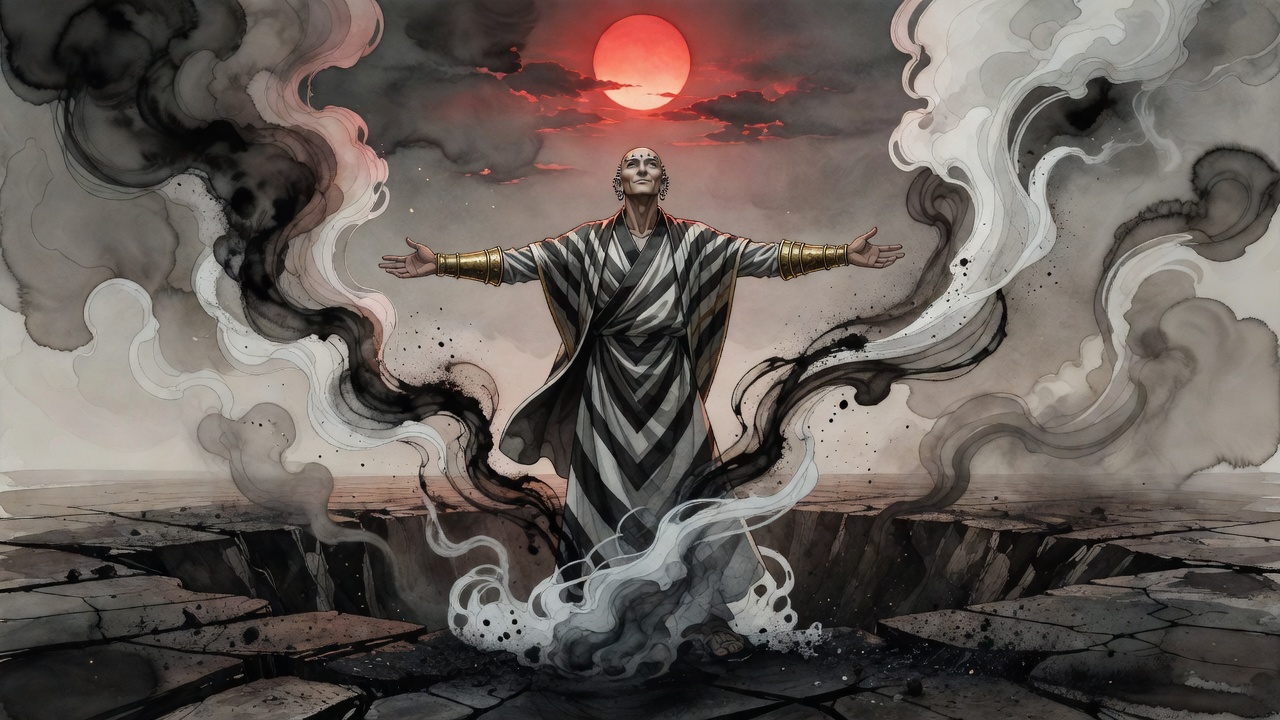
III · The Hero of Ages (2008). The world is ending. Ash falls thicker, the mists linger into the day and sicken those they touch, the ground shakes, and the thing Vin freed, Ruin, can twist any word not written in metal. Elend, now Emperor and Mistborn, marches with Vin on the storage caches the Lord Ruler hid across the empire and lays siege to Fadrex; Spook, burning tin until he cannot bear daylight, tries to save Urteau with Sazed and Breeze; the kandra TenSoon stands trial among his own people; and Marsh, an Inquisitor, does Ruin’s work while fighting it from inside. The book finally explains Hemalurgy: the spikes that made Inquisitors, koloss and kandra, and the earring Vin has had since childhood. At the Pits of Hathsin, Marsh kills Elend, and Vin, holding the power of Preservation, destroys Ruin and dies with him. Sazed, who has rejected religion after religion from the hundreds he carries and then chosen to believe anyway, takes up both powers and remakes the world from what those religions taught him: green grass under a blue, ashless sky. Era Two will call it the Catacendre, the end of the ash. The chapter epigraphs turn out to have been his all along, and the first of them was “I am, unfortunately, the Hero of Ages.”
Era Two: Wax and Wayne, and a secret history
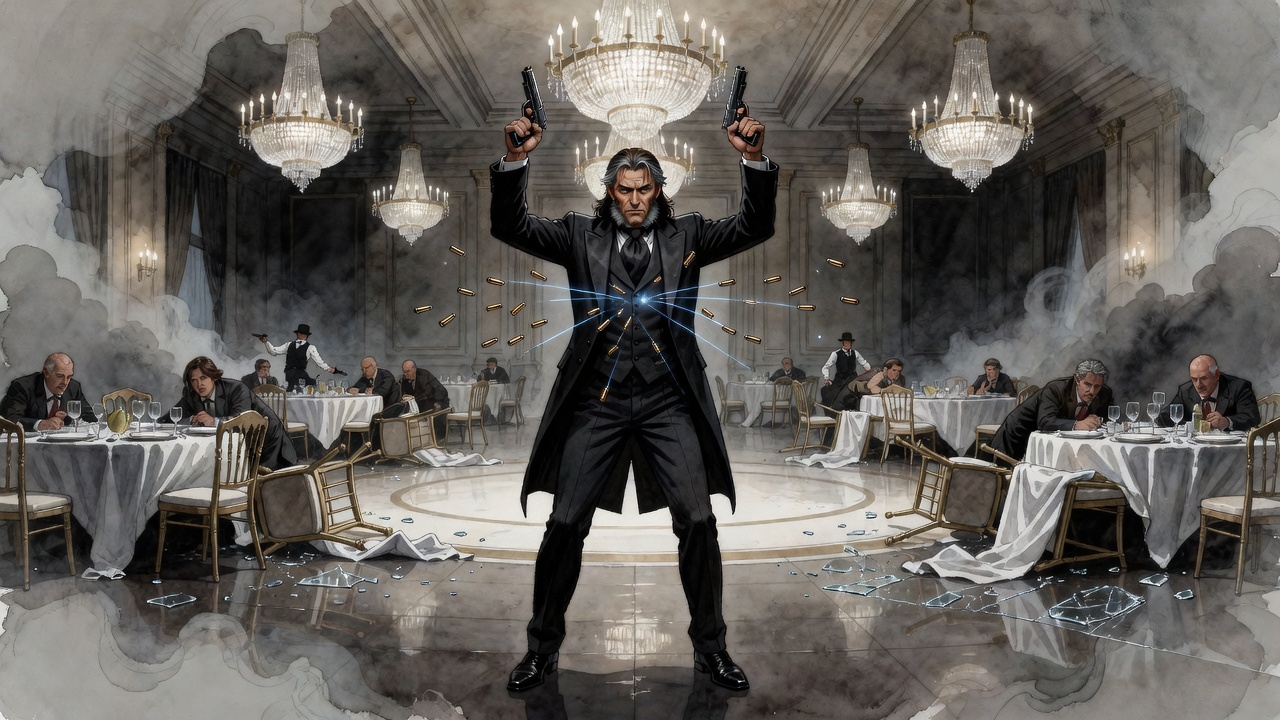
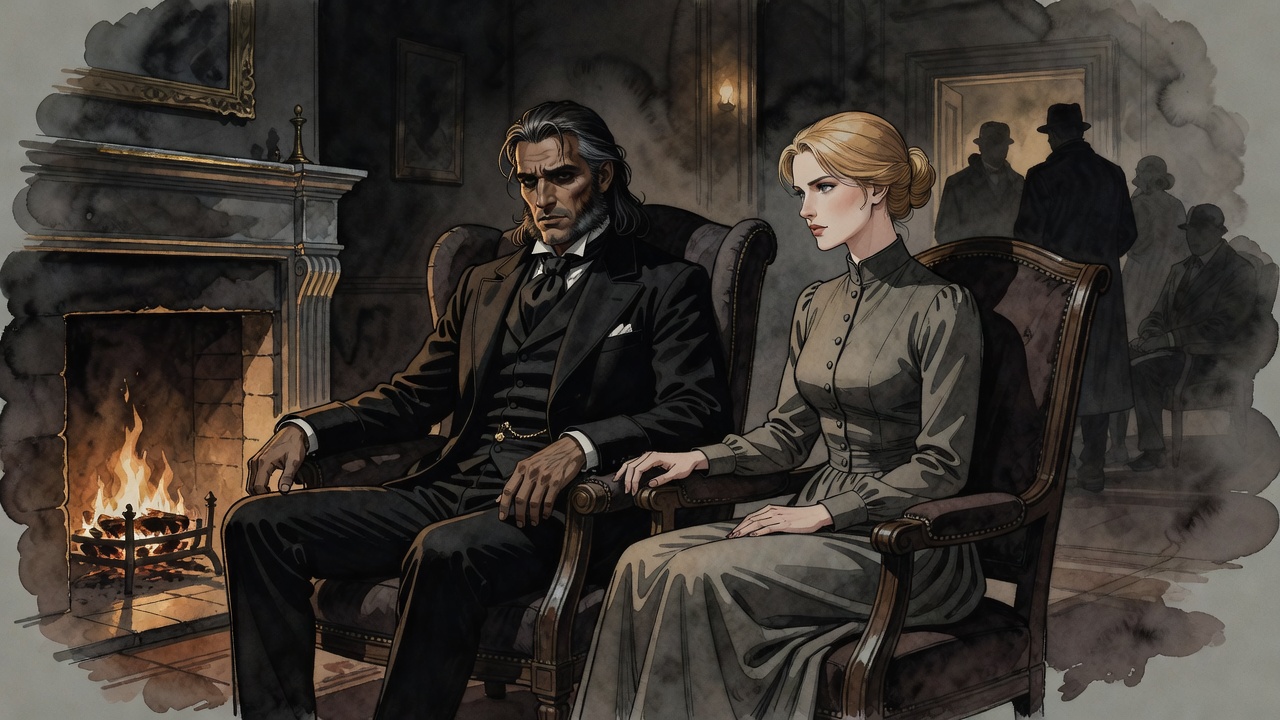
IV · The Alloy of Law (2011). In 341 PC, three centuries after the Catacendre, the survivors’ descendants live in the Elendel Basin, named for Elend, with railways, electric light and the first horseless carriages. Waxillium Ladrian, a Twinborn who can Push on metal like a Coinshot and change his own weight like a Skimmer, has spent twenty years as a lawman in the frontier Roughs. A hostage stand-off ends with his own bullet killing Lessie, the woman he loves, and he goes home to Elendel at forty-two to save his bankrupt noble house by marrying money. Wax’s old deputy Wayne turns up from the Roughs, and the money arrives: Steris Harms, with a twenty-page courtship contract and her half-sister Marasi, a law student. Then the Vanishers, thieves who rob trains no one can rob and kidnap women, raid a society wedding. Their leader is Miles Hundredlives, a lawman gone bad who heals from anything; behind him is a secret society, the Set, and Wax’s own uncle. It began as a stand-alone between bigger books and reads like one: short, fast and funny, a western with a Sherlock Holmes streak.
V · Shadows of Self (2015). A year on, Elendel’s workers are losing jobs to machines, floods have left its grain supply thin and its governor is corrupt. Someone is killing in ways meant to tip the city into riot, and the killer’s real quarrel is with the god Harmony, who, Wax learns, can hear him through his Pathian earring. Marasi, now a constable, works the case from inside the precinct; Wayne works it in borrowed hats. The killer is Bleeder, a kandra, one of the shapeshifters who wear the bones of the dead, who has pulled out one of her own spikes to break free of Harmony and gone mad. On one victim she leaves a note in the words of the man who once held Lessie hostage: “Someone else moves us, lawman.” On the Eastbridge, high over the Irongate, she shows him Lessie’s face. Lessie was a kandra all along, sent by Harmony to guard him in the Roughs, and she is Bleeder. Writing her, Sanderson said, was probably the darkest he had gone in a book. The book ends not on a victory but on Wax weeping on Steris’s shoulder.
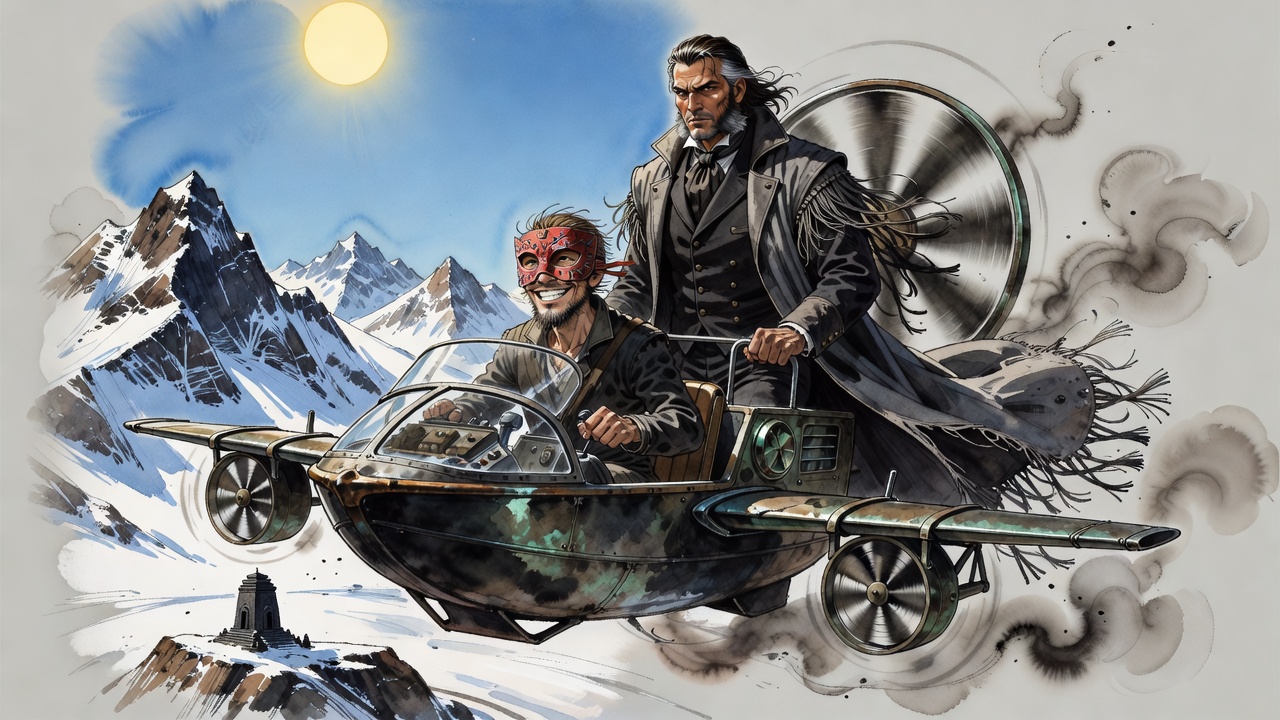
VI · The Bands of Mourning (2016). Six months later a falling water tower washes out Wax’s wedding to Steris (Wayne’s doing, though he only meant to flood the church), and the kandra ask Wax to find the Bands of Mourning, the Lord Ruler’s legendary bracers. He refuses until they show him a photograph of his sister Telsin, held prisoner. The trail runs by train to New Seran, then to a building outside Dulsing where the Set is studying a crashed airship from the far south, a land of masked peoples whose ships ride a metal that explodes in water, and up into the mountains, in a small flying craft piloted by Allik, one of the airship’s caged crew, to a temple full of traps. Telsin turns out to be one of the Set’s leaders. Wax dies, argues with Harmony beyond death and chooses to come back, and Marasi works out that the real Bands are the spearhead Wayne pried off the statue at the door, holds their power for a moment and puts it in Wax’s hand. Wax and Steris marry that night in a skyscraper penthouse. In the epilogue a beggar’s coin shows Wax a memory, seen through the eyes, one of them spiked, of the man the south calls the Sovereign.
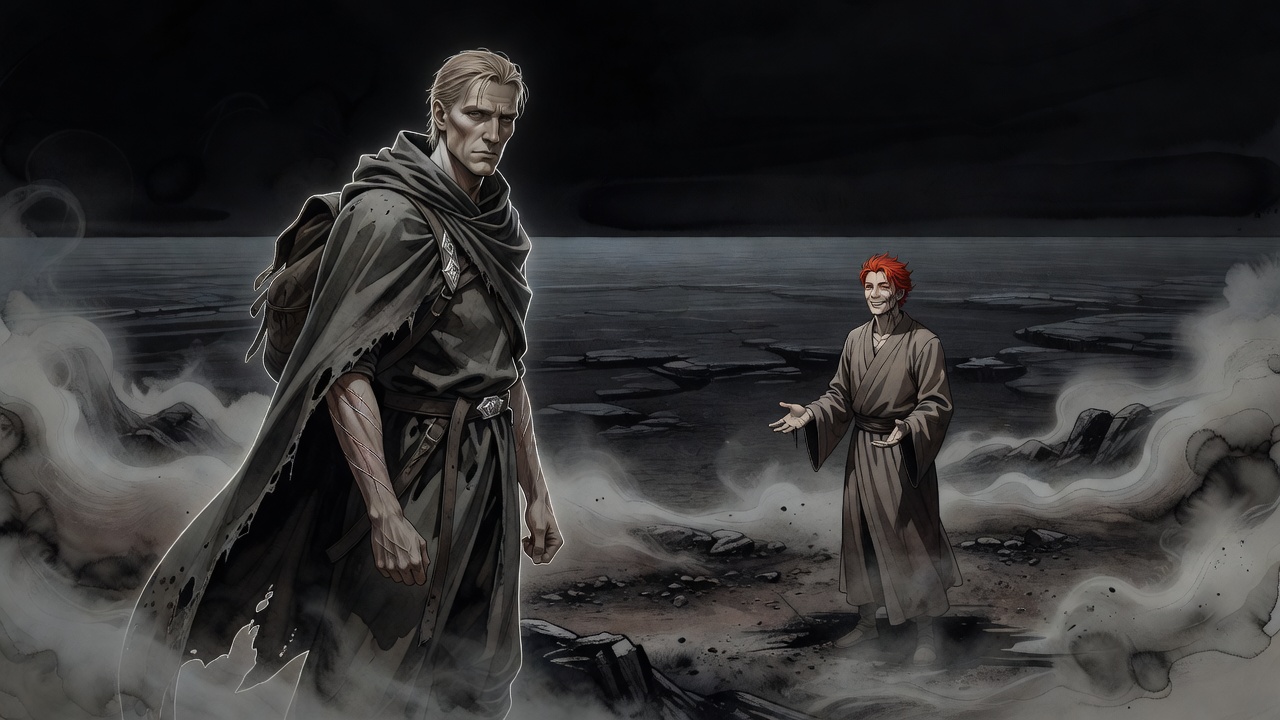
Secret History (2016), read here. Announced in the postscript to The Bands of Mourning and published as an e-book that same January, this novella replays the first trilogy, from Kelsier’s death on, from the far side of death. Kelsier dies in the first book and refuses to go on. He punches the god who greets him, Preservation, a frail and fading man he nicknames Fuzz, and ends up imprisoned in the power of the Well of Ascension, watching the second book from inside it. “God, it turned out, was a terrible liar.” Freed along with Ruin, he walks the misty realm between life and death, meets travellers from other worlds, crosses the sea to steal a device that could make someone a god, and for a while holds Preservation’s power himself before passing it to Vin. Things the trilogy showed from outside turn out to have been him: the knife in Elend’s side at the Well, the voice that tells Vin where the power comes from, the warning about spikes that was meant for Marsh all along. It closes on Spook, and on Kelsier looking for a way back.
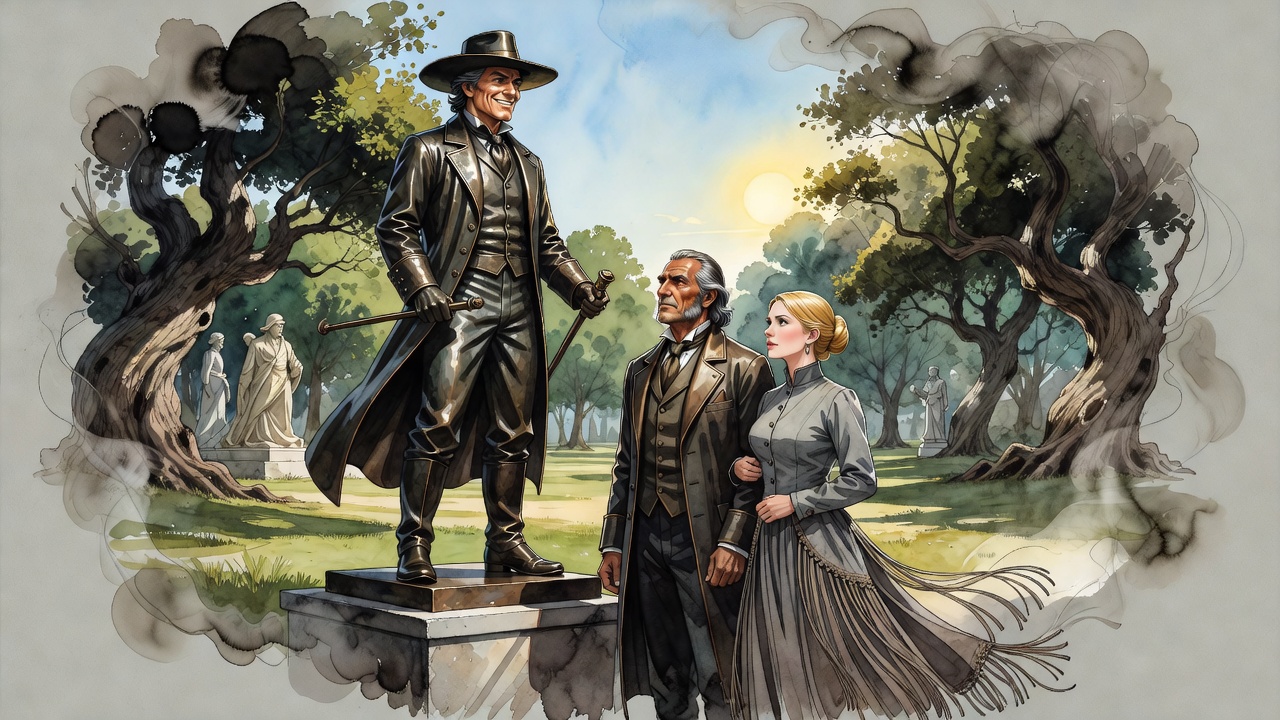
VII · The Lost Metal (2022). Six years on, in 348 PC, Elendel is a city of skyscrapers, motorcars and radio, a Malwish warship hangs over it with a new ambassador aboard, and the outer cities are restless. Wax is a senator and a father; Marasi and Wayne hunt the Set through the sewers; Steris runs everything. The Set is building a bomb of harmonium and trellium, the red-spotted metal of a god from another world, big enough to erase the city, and behind it stands that god, Autonomy, who means to take Scadrial through an Avatar: Telsin. Harmony asks Wax to be his sword; Wax insists he is a lawman too. The trail leads to the outer city of Bilming, where the dying Inquisitor Marsh and the Ghostbloods, a secret society that answers to Kelsier, are already at work. Marasi goes beneath Bilming and frees the people the Set has been draining; Wax and Wayne fight their way up the Shaw, Bilming’s tallest tower; Steris evacuates Elendel. Wayne dies aboard the bomb ship, shrinking the blast inside a perfect speed bubble. “I’m probably the best constable who ever rusting lived!” he tells Harmony afterwards. Seven epilogues follow, the last of them two years later, in front of his statue.
What comes next
Sanderson always meant to keep going. The third era, Ghostbloods, is set about fifty years after The Lost Metal, in an Elendel that is an analog of the 1980s, with early computers, neon and cars held aloft by a steelfield. His site said in 2025 that he is writing the whole trilogy before releasing any of it. As of late 2025 he had scheduled the three books for December 2028, 2029 and 2030 and called 2028 “a pretty firm release date”. In 2026 the screenplay for Apple’s film took first place on his desk, though when the deal was announced he said Ghostbloods would still be on time in 2028, and the progress tracker on his website now shows the first book through a second draft. A fourth era is planned as space opera.
Mistborn is also one corner of something larger. Scadrial belongs to Sanderson’s Cosmere, a shared universe in which a being called Adonalsium was killed and its power shattered into sixteen Shards; two of them, Preservation and Ruin, made this world, and Hoid, a traveller between worlds, turns up in nearly every book. Most of that stays in the background until Secret History and The Lost Metal bring other worlds’ travellers on stage. None of it is needed to read Mistborn, and The Final Empire is one of the books Sanderson himself suggests for starting the whole Cosmere.
Who walks through the saga
Vin
Kelsier
Elend Venture
Sazed (Harmony)
Breeze
Ham
Spook
Marsh (Ironeyes)
TenSoon
The Lord Ruler
Waxillium Ladrian
Wayne
Marasi Colms
Steris Harms
MeLaan
Telsin Ladrian
Hoid
Reading order
- Era One: I The Final Empire (2006) · II The Well of Ascension (2007) · III The Hero of Ages (2008). One story in three volumes.
- Era Two: IV The Alloy of Law (2011), written as a stand-alone · V Shadows of Self (2015) · VI The Bands of Mourning (January 2016) · VII The Lost Metal (2022). V–VII were announced as a trilogy in 2014.
- Secret History (e-book, January 2016). Sanderson’s postscript to VI says to read it after VI, which it spoils very slightly; read it before VII, which leans on it. It can follow III, never precede it, and it is no place to start.
- Otherwise publication order is reading order. Start with The Final Empire, which Sanderson also lists among good first books for his whole Cosmere; The Alloy of Law can serve as a way into the Cosmere, but it spoils the trilogy.
- Short works, both collected with Secret History in Arcanum Unbounded (Tor, 2016): The Eleventh Metal (2011), a Kelsier prequel in which the Mistborn Gemmel trains him, first published with the Mistborn Adventure Game; and Allomancer Jak and the Pits of Eltania, Episodes Twenty-Eight through Thirty (2014), an Era Two pulp serial from inside the world, first published with the game’s Alloy of Law supplement. Jak is the hero of the story Wayne’s mother tells him in VII’s prologue.
- Era Three, Ghostbloods: unpublished; scheduled, as of December 2025, for December 2028, 2029 and 2030.